Recycling is an essential practice that plays a significant role in preserving our environment. It involves the process of converting waste materials into reusable resources, thereby reducing the amount of waste that ends up in landfills or pollutes our natural surroundings. Teaching children about recycling from an early age is crucial in fostering a sense of responsibility towards the planet and instilling sustainable living habits. In this post, we will explore the importance of recycling, its benefits, and provide practical tips for kids to actively participate in this eco-friendly endeavour.
Talk about the why
Climate change is a significant global issue that affects the environment and human life. It is a phenomenon that is caused by the increase in greenhouse gases, primarily carbon dioxide, in the atmosphere. The effects of climate change include rising temperatures, sea level rise, extreme weather events, and changes in precipitation patterns. These changes have a significant impact on ecosystems, wildlife, and human societies. It is essential for children to understand the causes and effects of climate change and to take action to learn how to reduce their carbon footprint and promote sustainable living practices. By educating themselves and others, children can play a vital role in mitigating the effects of climate change and creating a more sustainable future.
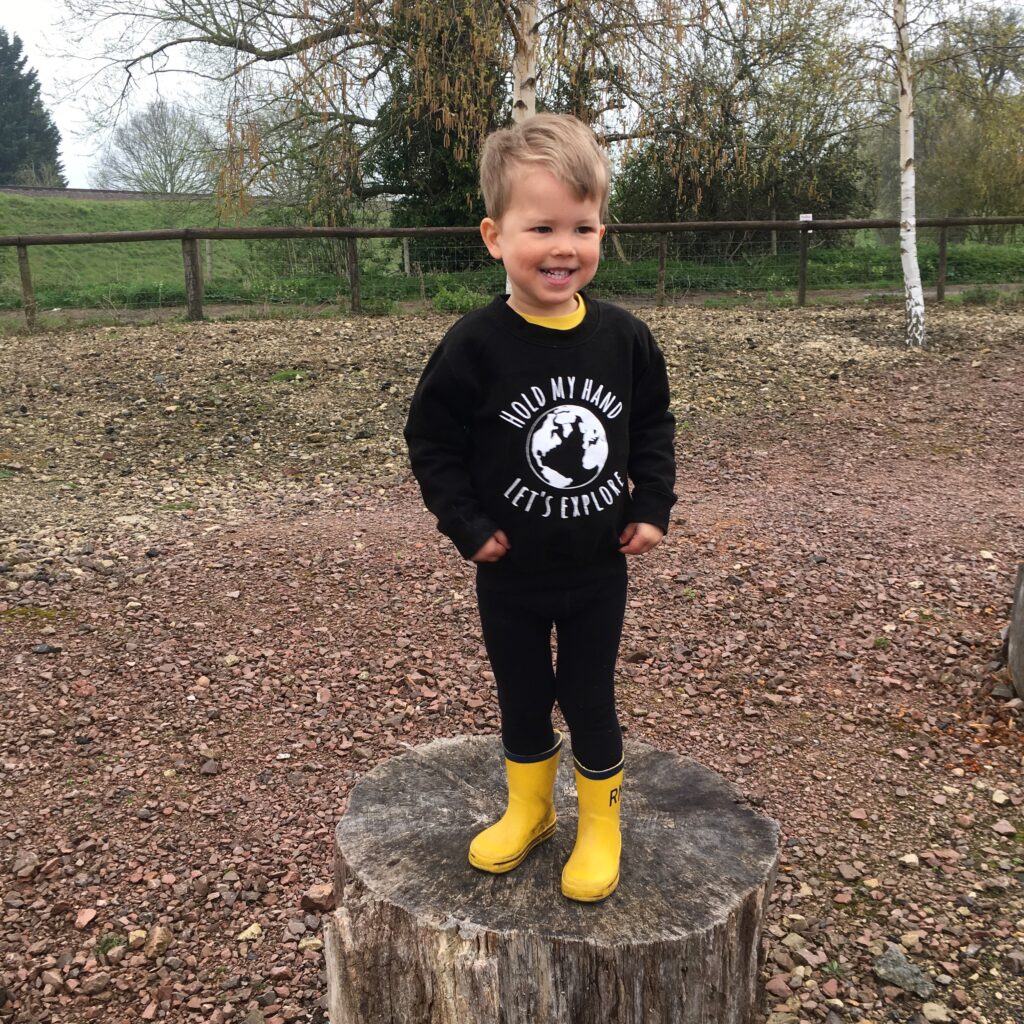
Earth Overshoot Day is worked out by dividing the amount of ecological resources Earth is able to generate that year, by humanity’s demand for that year, and multiplying by the number of days in that year. In 2023, Earth Overshoot Day fell on 2nd August, so ever since then, we have been using resources that the Earth can little afford to give.
There are some brilliant children’s books available to help you broach and explore the topic of sustainable living, we love A Planet Full of Plastic, Away and the Little People, Big Dreams book about Greta Thunberg. The BBC website also has a range of child friendly videos about climate change.
Make it easy to separate waste.
If you are in the market for a new kitchen bin, try to buy one with at least two compartments. That way, you can use one side for waste that needs to go to landfill and the other side for things that can go in your curb-side recycling box. When the recycling side is full, encourage your children to help sort the waste into the right boxes outdoors. If you aren’t in the market for a new kitchen bin, why not place a storage box next to your current bin.
You could also use an app like Bower to scan your recycling and earn money, as well as find out more about the CO2 benefits of recycling.
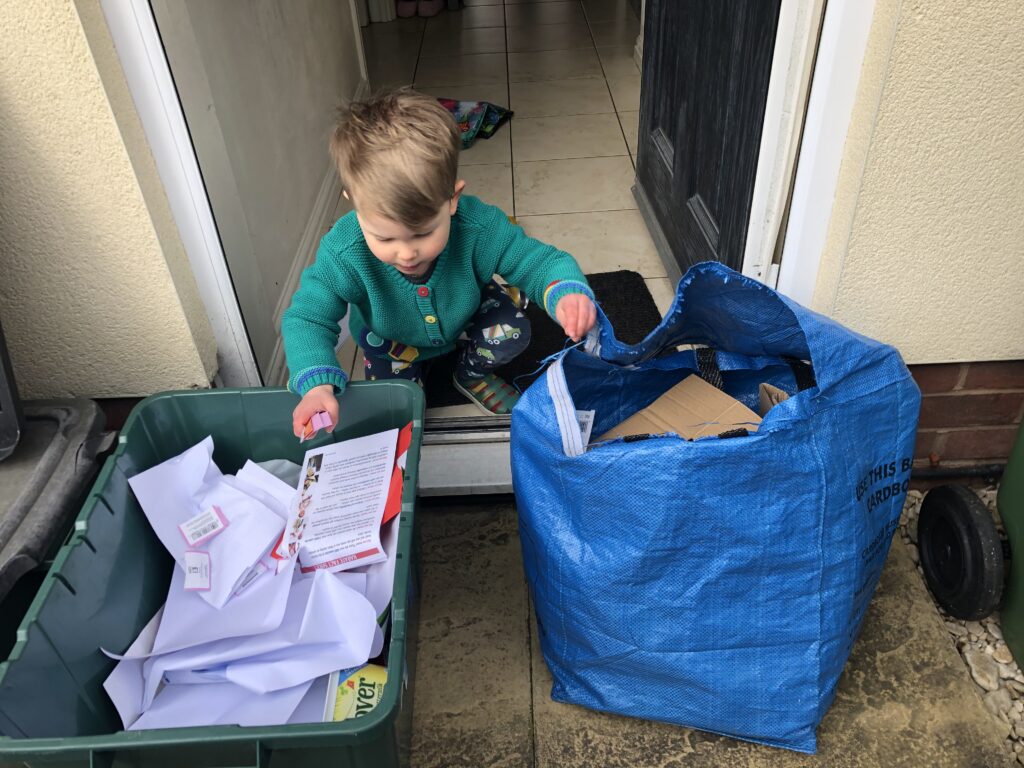
Make sure your outdoor recycling boxes are labelled so that your children can do this job as independently as possible.
You could also have boxes to sort things that cannot be recycled at the curb-side, but can be taken to your local household waster recycling centre. We sort tetra packs, batteries, small hard plastic and metal items for the recycling centre, plastic bags to be recycled at the supermarket and bolster packs to be taken to our local Superdrug for recycling.
Reusable everything
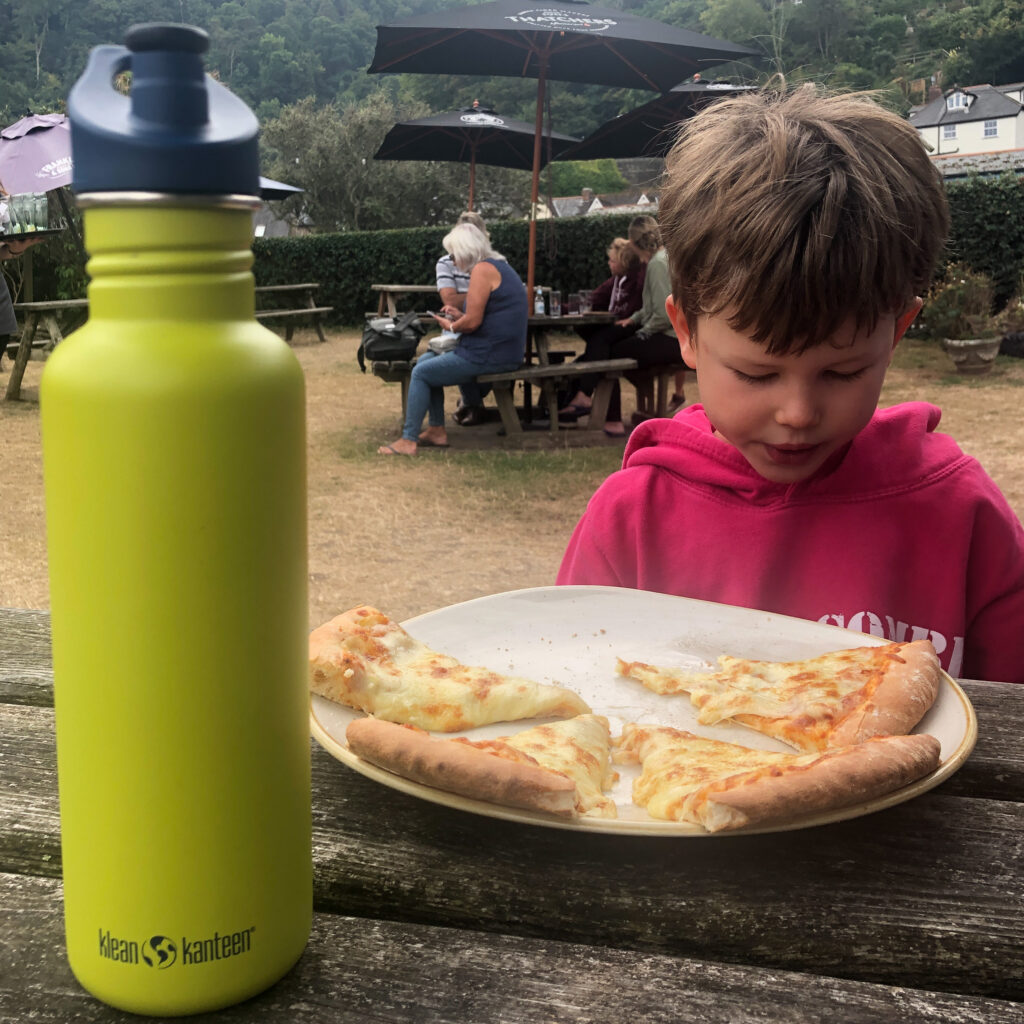
Start small with your sustainable living quest and ensure that your child is taking a reusable water bottle and lunch box to school each day. You could also send your child’s break time snack to school in a reusable bag or pouch.
Model sustainable living behaviour by using a KeepCup or similar when you buy a coffee and take containers along to your local refill shop to fill with pasta, rice, sugar and even hand soap!
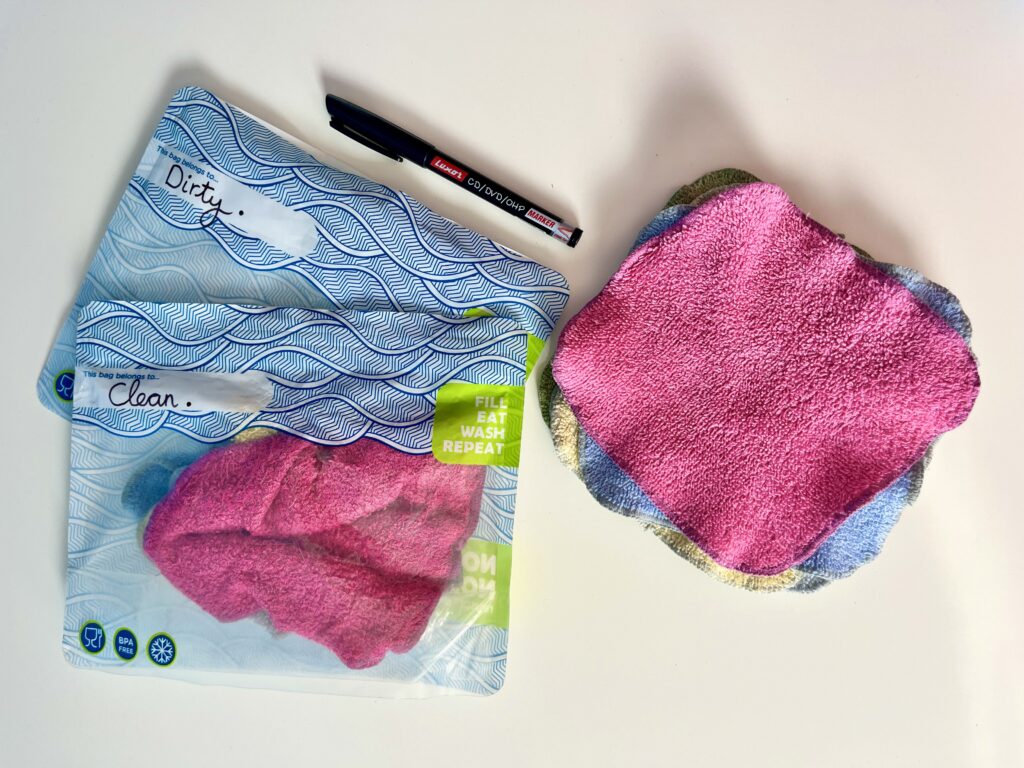
Consider investing in reusable wet wipes, these can be used for wiping faces and hands and mopping up small spills. You can even buy reusable kitchen towels to further cut down on waste.
Alternative transport
When a car runs, it produces gases that come out of the exhaust pipe. These gases can be harmful to the environment and to our health. That’s why it’s important to make sure our cars are well maintained and running as cleanly as possible.
In order to do our part, we can try to leave the car at home from time to time. Can you walk or cycle to school? If your destination is a bit too far to walk or cycle to, how about taking the train or bus sometimes? Be sure to discuss how much fuel you’re saving in cash and planet terms!
Get them involved
There are lots of little things we can all implement at home, to try to reduce our impact on the planet. Hanging out the washing instead of using the tumble drier is an easy swap to make during the warmer months, children can get involved by passing the pegs or draping items over a clothes airer if you’re drying washing indoors.
Encourage children to conserve energy by turning off the lights when they leave a room and switching off their toys and appliances when not in use.
Browse sites like Facebook Marketplace and Vinted together to find pre loved clothing and toys. Work together to sort out their outgrown things to sell on in the same manner.

Why not Invest in some litter picking kit and clean up your street or local park. Litter is not just an eyesore, it also poses a serious threat to wildlife and their habitats.
The careless disposal of waste can lead to pollution of our waterways, soil, and air, which can have long-lasting effects on our health and the environment. The accumulation of litter can also lead to clogged drains, flooding, and other environmental hazards. Children tend to particularly identify with the plight of local wildlife, so discuss how litter picking is beneficial to hedgehogs, birds and foxes.
You could also use an app like Litter Lotto to earn points, enter prize draws and be in with a chance to win money every time you throw something away.
So, let us encourage our children to be the sustainable living heroes our planet needs. Let us empower them to make a difference, to be the change they wish to see in the world. Together, we can teach them that even the smallest acts of kindness towards our planet can create ripples of change. Whether it’s planting a tree, picking up litter, or simply turning off the lights when they leave a room, every action counts.
Leave a Reply